


Perimenopause Sleep Problems: Why You're Wide Awake at 3 a.m. and What's Worth Looking Into
If your sleep fell apart in your late 30s or 40s, it's not just you, and it's not in your head. Shifting hormones, night sweats, and a stress response that runs high at night change how you fall asleep and stay asleep. It's worth looking into with your provider, and there is plenty you can do inside your day.
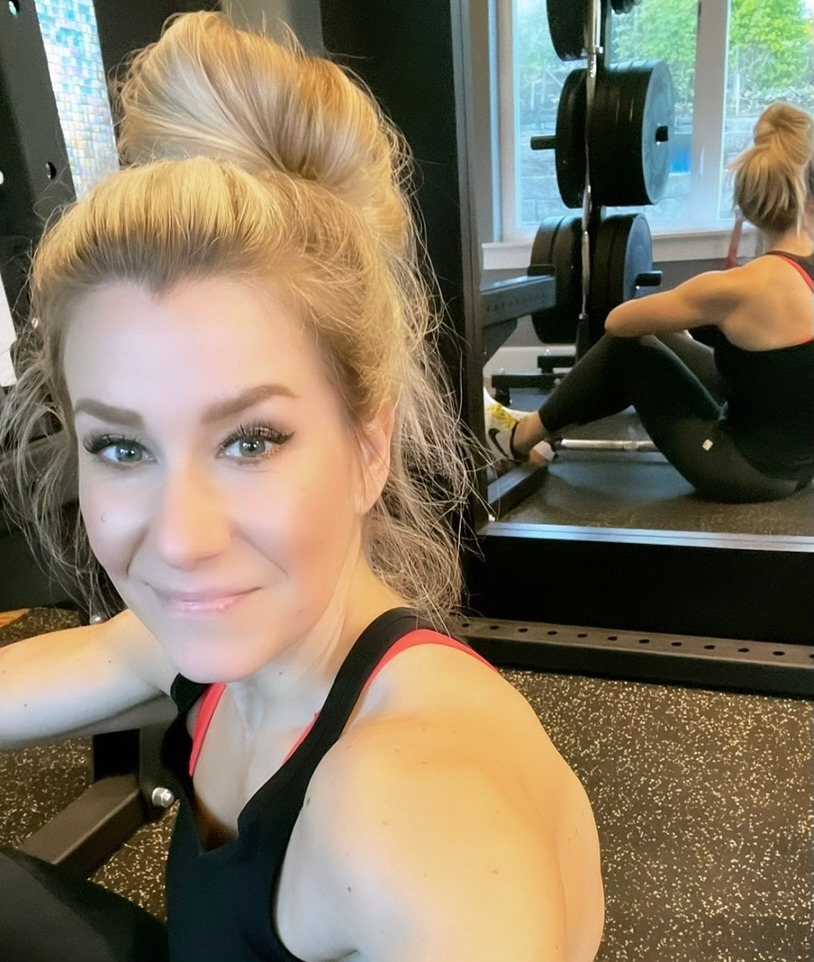
 Meet Mia, my in-house sleep expert. She used to drop in on my gym sessions, but since we moved to the new gym she’s gone back to full-time napping. |
The clocks went back this weekend. If you've spent months staring at the ceiling at 3 a.m., that extra hour did not feel like a gift.
Poor sleep was one of my very first perimenopause symptoms. If you're not getting quality sleep, you're going to struggle with your energy, your food choices, your body composition, your mood, and your recovery.[1,2] These were all things I was struggling with.
So hear this first: sleep trouble is one of the most common parts of the menopause transition. You haven't turned into a bad sleeper, and you haven't lost your discipline.
Why do lifestyle and hormones have to work together?
Because it's never one or the other. One of the biggest mistakes I see is women blaming their hormones without checking their lifestyle, then being shocked when their HRT isn't working for them. We always have to start with lifestyle in combination with hormones. Whether hormone therapy is right for you is a conversation for your provider.
Why does my sleep schedule matter so much?
Because everything we do runs on a rhythm. Your body keeps a 24-hour clock, your circadian rhythm, that helps set when you feel sleepy and alert. If you go to bed and wake up at different times through the week, you are absolutely going to struggle. Pick a bedtime and wake time and keep them close, even on weekends.[3]
How many hours do I need, and how should I set up my bedroom?
Aim for at least seven hours a night, the American Academy of Sleep Medicine's recommendation for adults.[4] A lot of women need more. Trust me, feeling better and watching your body respond to your efforts is way better than that evening Netflix series. Keep the bedroom quiet, dark, and cool, and limit bright light and screens in the evening.[3] If hot flushes and night sweats are part of your story (hot flush is the technical term, though most people call it a hot flash), adjusting the room temperature and bedding is an easy start.[5] Morning light helps too: it's linked to earlier sleep timing,[6] so I like an easy walk outside soon after waking.
What should I eat and drink, and when?
Have a few calories first thing. I ask women to have a small amount of fuel within an hour of waking, ideally protein with some carbohydrate. This isn't a meal. It's a signal to your brain that food is coming, so your morning stress response can settle. Dr. Stacy Sims has explained that women's cortisol rises on waking and needs that signal to come down.[7,8] The research is mostly observational: women who habitually skipped breakfast had higher cortisol and a flatter daily rhythm.[9]
Then eat real meals. Aim for three to four meals with 25 to 35 grams of protein each, spread across the day. Dr. Sims' co-authored position stand supports this, with the upper end for peri and postmenopausal women.[10] It's written for female athletes, so treat it as a guide.
Give dinner a head start. I coach finishing your last meal two to three hours before bed. The research is mixed,[11,12] but it costs nothing.
Include carbohydrate at your last meal, and go easy on fat. In a sleep-lab study, a high-glycemic carbohydrate meal four hours before bed shortened the time it took healthy men to fall asleep,[13] though not every trial finds an effect.[14] Fat is the one to watch: high-fat eating may cut total sleep time,[13] and a large observational study linked fatty, fried dinners to poorer sleep that night.[15]
Move your coffee earlier. In one study, 400 milligrams of caffeine (about two to three cups) taken six hours before bed cut sleep by more than an hour, and people didn't notice.[16] Finish coffee at least six hours before bed.
Be honest about alcohol. It may make you sleepy, but it disrupts sleep quality, and for some women it triggers hot flushes and night sweats. Mayo Clinic and Henry Ford Health physicians suggest skipping it before bed and keeping it to one drink a day or less.[17,18]
Where does strength training fit in?
Exercise helps sleep in menopausal women. A 2023 meta-analysis found it reduced insomnia severity,[19] a 2025 network meta-analysis ranked combined exercise, like strength plus cardio, highest for sleep quality,[20] and in a small trial of 60 postmenopausal women with insomnia, resistance exercise beat aerobic exercise.[21] That's promising, not proven. Finish hard sessions at least two hours before bed.[22]
Here's the catch. A rough stretch of sleep changes what your body can handle, so the same program can feel manageable one week and crushing the next. As a corrective exercise specialist, a weight loss specialist, a fitness nutrition specialist, a certified personal trainer, and a menopause specialist, I believe guidance matters for safety and results. A template can't see how you slept. A trainer who watches your movement and scales your week can.
Why is my sleep falling apart in perimenopause?
Here's the hormone side of the picture. Roughly 40 to 56 percent of women report sleep problems during the menopause transition,[5] and both estrogen and progesterone are positively associated with sleep.[23] Progesterone calms your nervous system and is usually the first to decline. Estrogen swings erratically before it drops, which touches sleep and temperature regulation. Cortisol can run dysregulated and is often worse at night. That's the tired but wired feeling. And it loops: poor sleep disrupts your hormone rhythm, which disrupts sleep. This isn't a discipline problem. It's chemistry.
Why do I wake up at 3 a.m. and can't fall back asleep?
Night waking is one of the most common ways sleep breaks down in the menopause transition. In one large study of perimenopausal women, awakenings were the most frequent insomnia symptom,[24] and night sweats and hot flushes are a major driver.[25] In a 2025 trial, women whose night-time hot flushes dropped the most saw the biggest sleep gains.[26] Waking hot and drenched is a different conversation with your provider than waking wired and anxious.
Is it hormones, or is something else going on?
Often hormones, but not always. Menopause-related sleep problems can have more than one cause at once, including sleep apnea, restless legs, and chronic insomnia.[27]
The most important question to ask: "Will you work from my symptoms, not just my lab results?" Hormone levels can swing a lot in perimenopause, so one test can miss what's really going on. |
What you notice | What may be behind it | What to ask your provider about |
Wide awake in the early hours, anxious or wired | Shifting progesterone, cortisol that runs high at night | Will you go by my symptoms, not just my labs? Then ask about a hormone panel, including estradiol, progesterone, and cortisol |
Waking hot or drenched | Night sweats and estrogen swings | Your options for night sweats, including hormone therapy[28,29] |
Tired all day, wired at night | Cortisol, blood sugar, insulin, thyroid | Insulin, A1C, ferritin, and a full thyroid panel (TSH, free T3, free T4, reverse T3) |
Loud snoring, gasping, or waking unrefreshed | Sleep apnea, which becomes more common as you move through menopause[30] | Whether a sleep evaluation makes sense |
Hormone therapy remains the most effective option for hot flushes and night sweats, and it can improve sleep for women disrupted by them.[28,29] It isn't right for everyone, which is why it's a conversation for a provider who knows your history. If you get brushed off, you're allowed to find someone who takes it seriously.
You don't have to accept 3 a.m. as your new normal. Work the checkpoints and the hormone questions together, and bring the right questions to your provider.
Frequently asked questions
Is poor sleep in perimenopause normal?
It's common, and the changes behind it are normal. But normal isn't the same as acceptable. I'm happy to report that I'm a good, sound sleeper now, after thinking I'd never sleep soundly again.
What should I ask my doctor about my sleep?
Will you work from my symptoms, not just my lab numbers? Levels can fluctuate a lot in perimenopause.
Are you confident working with perimenopause and menopause, including hormone therapy, and will you show me all my options?
Is it okay to eat before bed?
A big meal close to bedtime is the one to avoid, and a high-fat one is the culprit to watch most. If you need to eat late, keep it small and light, with some carbohydrate and protein. The research is mixed; a small lab study in healthy young adults found a 9 p.m. carbohydrate or protein drink didn't change measured sleep.[31]
Should I take magnesium glycinate or another supplement for sleep?
Magnesium glycinate comes up a lot, but it's one of a ton of different sleep supplements, and any of them may affect you differently. We all have biological variance. That's a decision for you and your provider or pharmacist, who can check it against your labs and medications. Please don't start, stop, or change a supplement or medication because of a blog post. I'm happy to help with a list you can take to your doctor.
Ready to feel like yourself again?
I train women in midlife through live, remote personal training with a body composition focus: individualized programming built around your hormones, nutrition, sleep, and recovery, plus a real person who sees you through the week.
Training with KD Elite is not one-dimensional. Although we will see each other frequently during the week, I don't leave out any single lifestyle factor. It's all planned and deliberate, because our bodies work as an ecosystem. We act as a whole-body health optimization concierge.
Start with a free 15-minute consultation call. Want to see everything we offer? [Services page link needed]
Know someone who's been lying awake? Send this to a friend who needs to hear it.
Your turn: Have you struggled with sleep, or noticed your sleep change, in perimenopause or menopause? Tell me in the comments. I read every one. |
I'm a corrective exercise specialist, a weight loss specialist, a fitness nutrition specialist, a certified personal trainer, and a menopause specialist, but I'm not a doctor. This post is educational and is not medical advice. Please talk with your physician before making changes to your health routine, medications, or supplements.
Sources
The numbers in brackets point to the full source list. View all 31 sources (PDF)


Comments